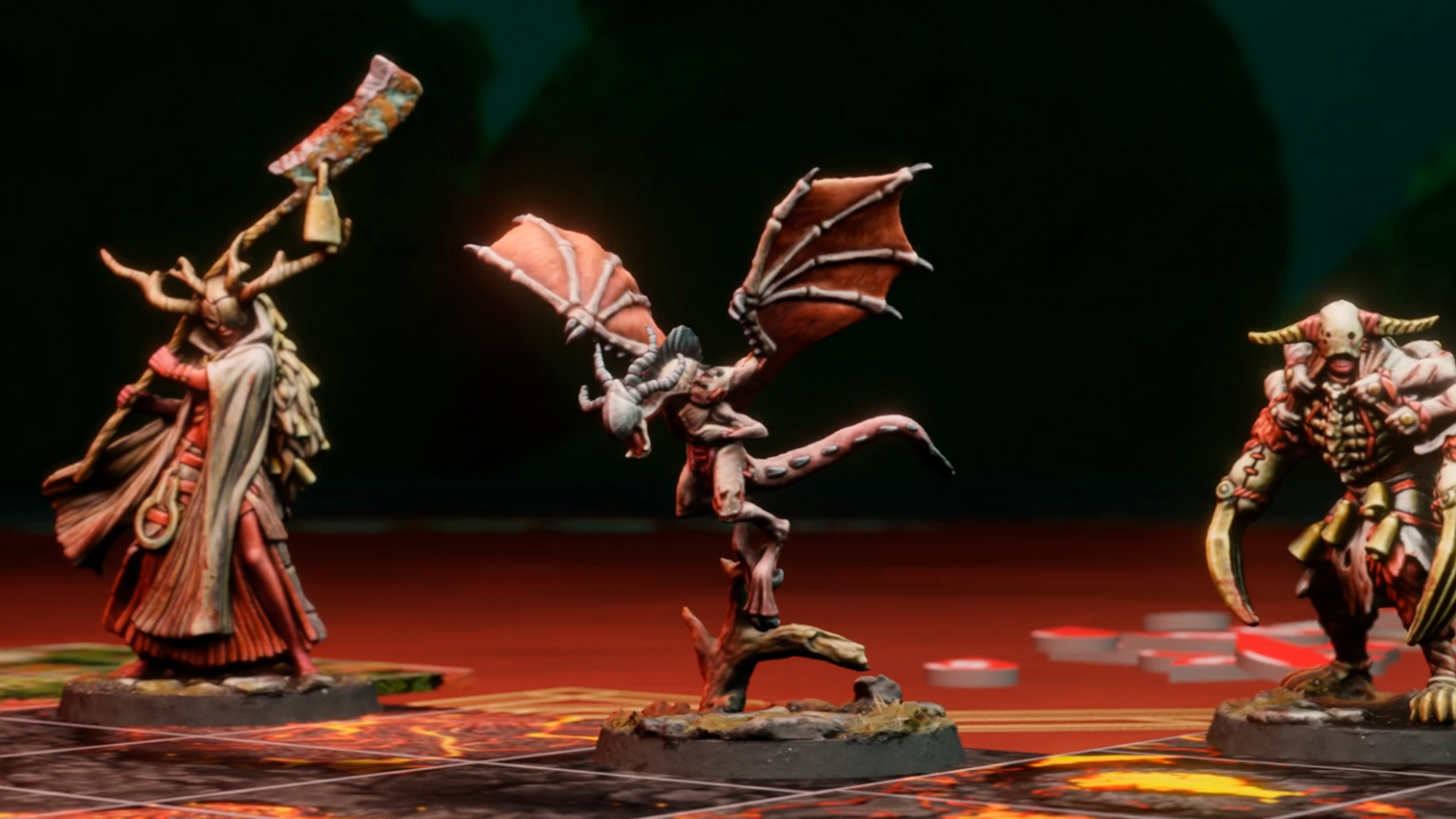
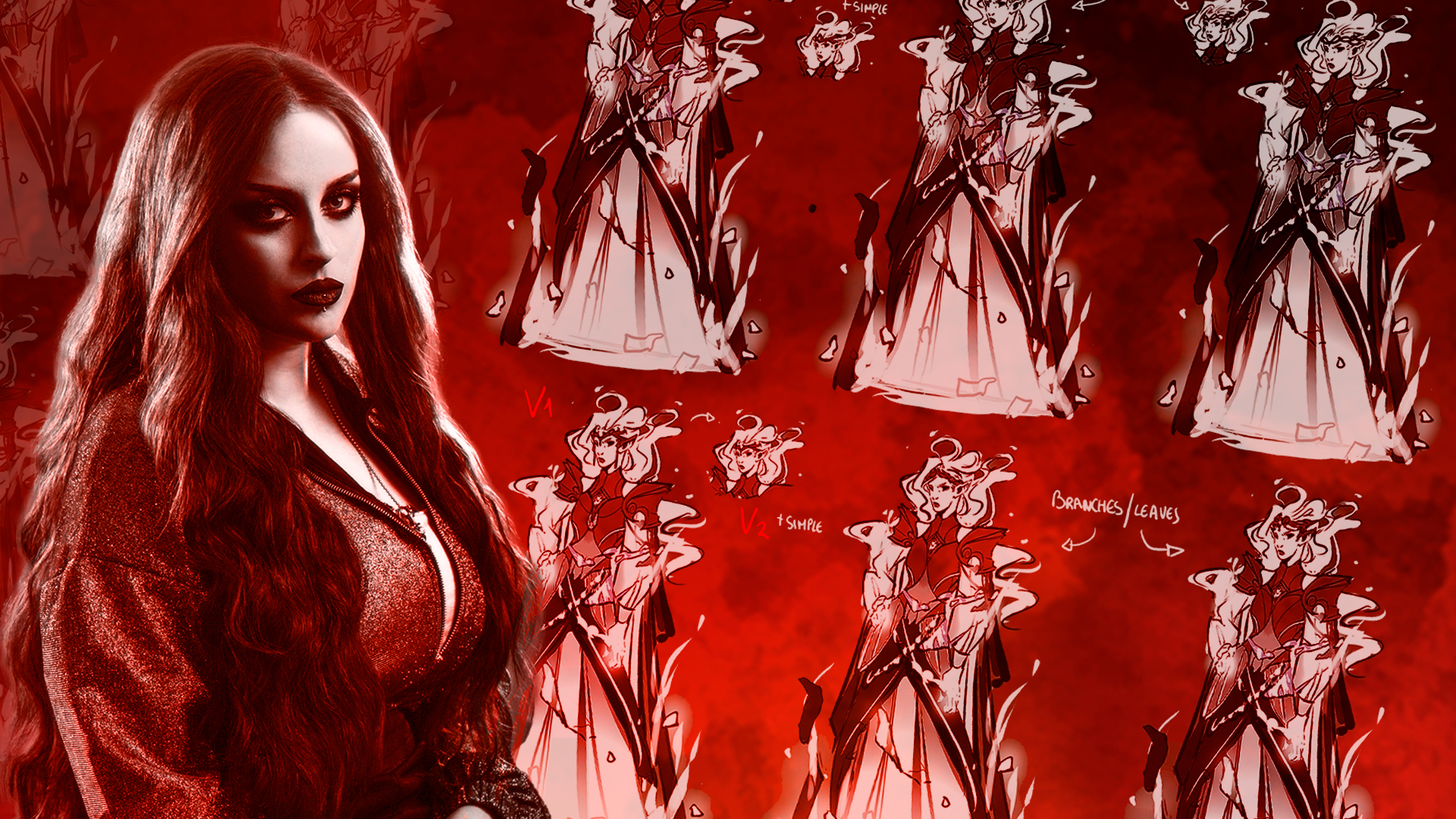
Claudia Cuen is a conceptual artist with a degree in Video Game Art (HND in Computer Game Development at ESAT). She's created several characters for Warcrow Adventures. Among them, are Vinyara and Echoes.
Today, she's talking about the creative process and she offers some advice for future artists:
I'm new to the industry, Warcrow Adventures is my first professional job and I'm very grateful for being given the opportunity of working with them. I've always been a medieval fantasy geek, and for me, this IP fit like a glove to showcase my skills. Ever since I was a child, I've loved creating characters, their backstory, and their universes; so having contributed by bringing an idea to life through art is an honor.
Also, Claudia has played Dungeons & Dragons, Darkest Dungeon I, and The Legend of Zelda for NES, among others.
The importance of a public portfolio
Well, it was quite surprising: someone from Corvus Belli saw my portfolio on social media and contacted me to see if I could work with them. I was thrilled!
Have we mentioned that she's just 23 already? :O
A character's concept design briefing
Whenever a character is about to be created, I receive detailed information about their backstory.
A key issue is to start by forming mental images of the character and to "sketch-storm" what you imagine the character would be in the flesh.
Additionally, they usually provide some visual cues or important physical details that need to be reflected in the character's design.
Echo
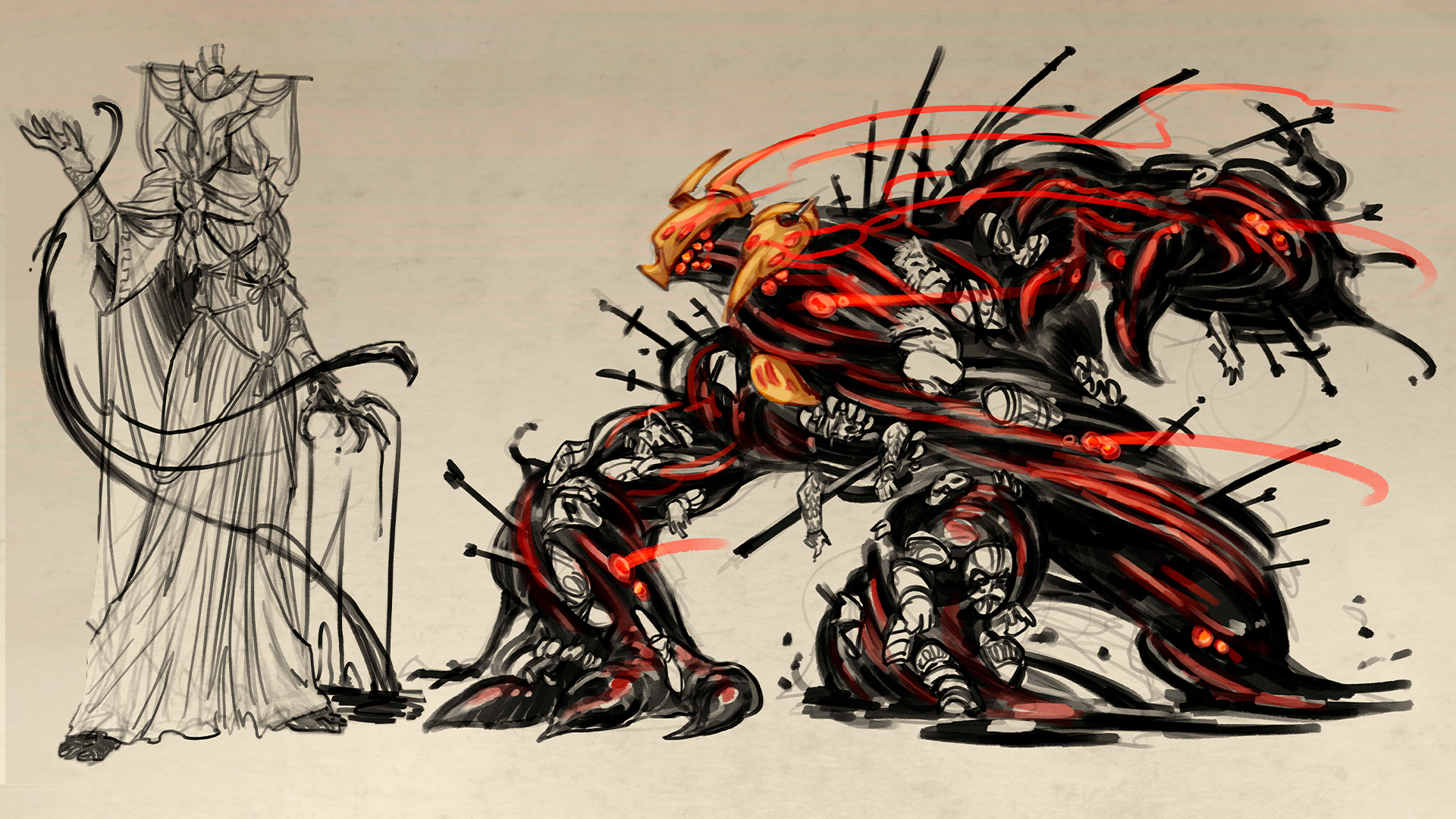
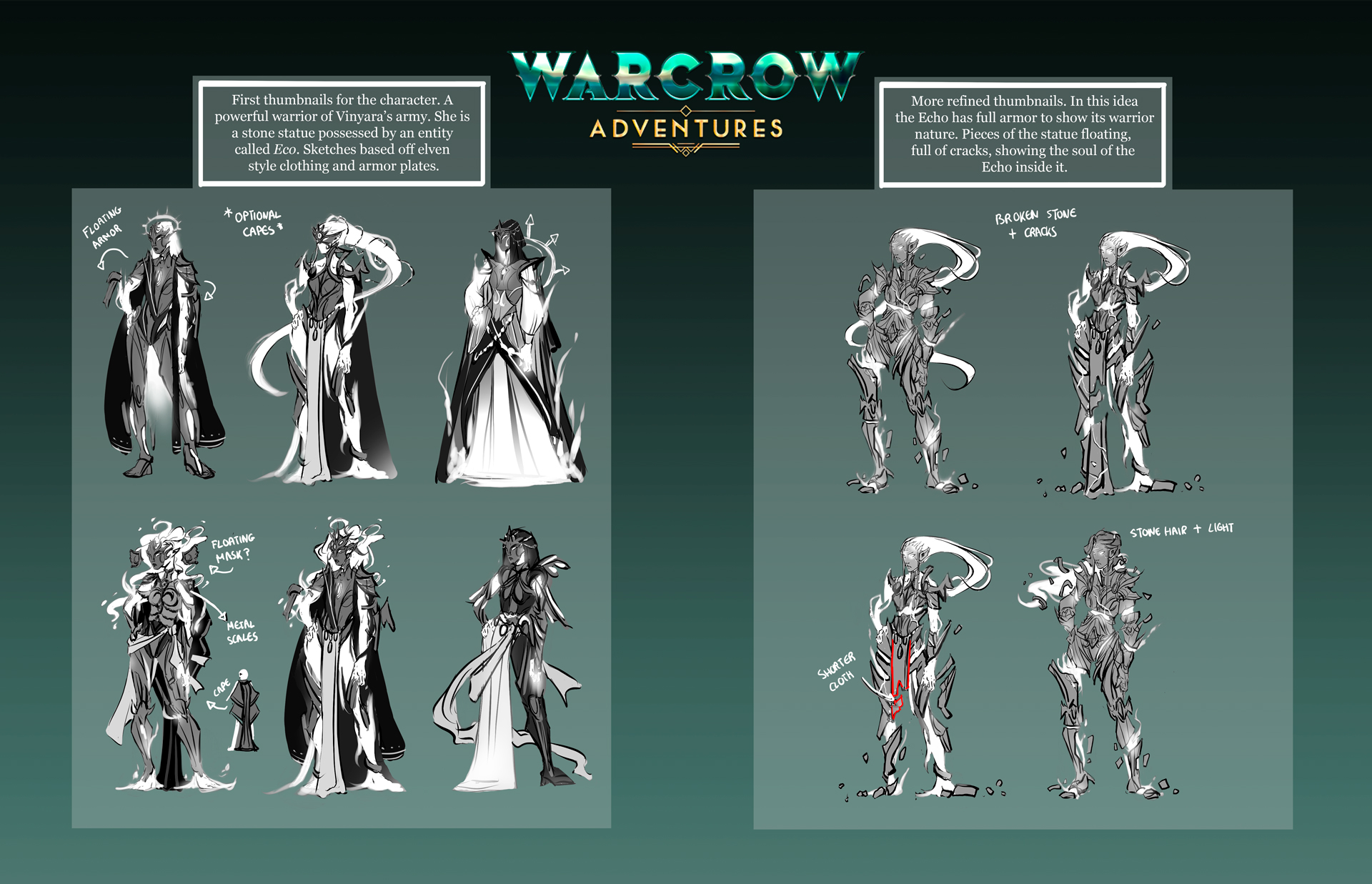
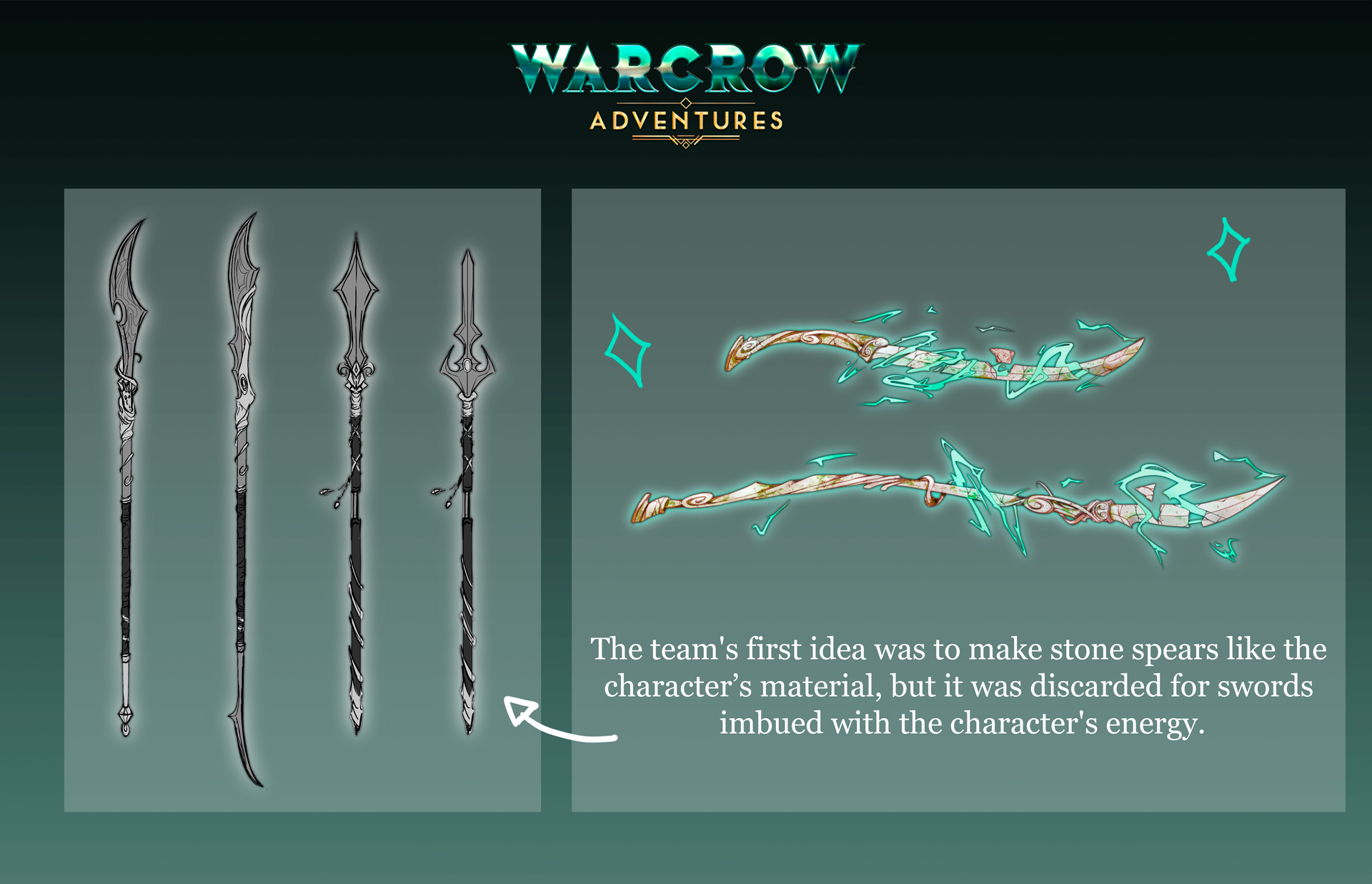
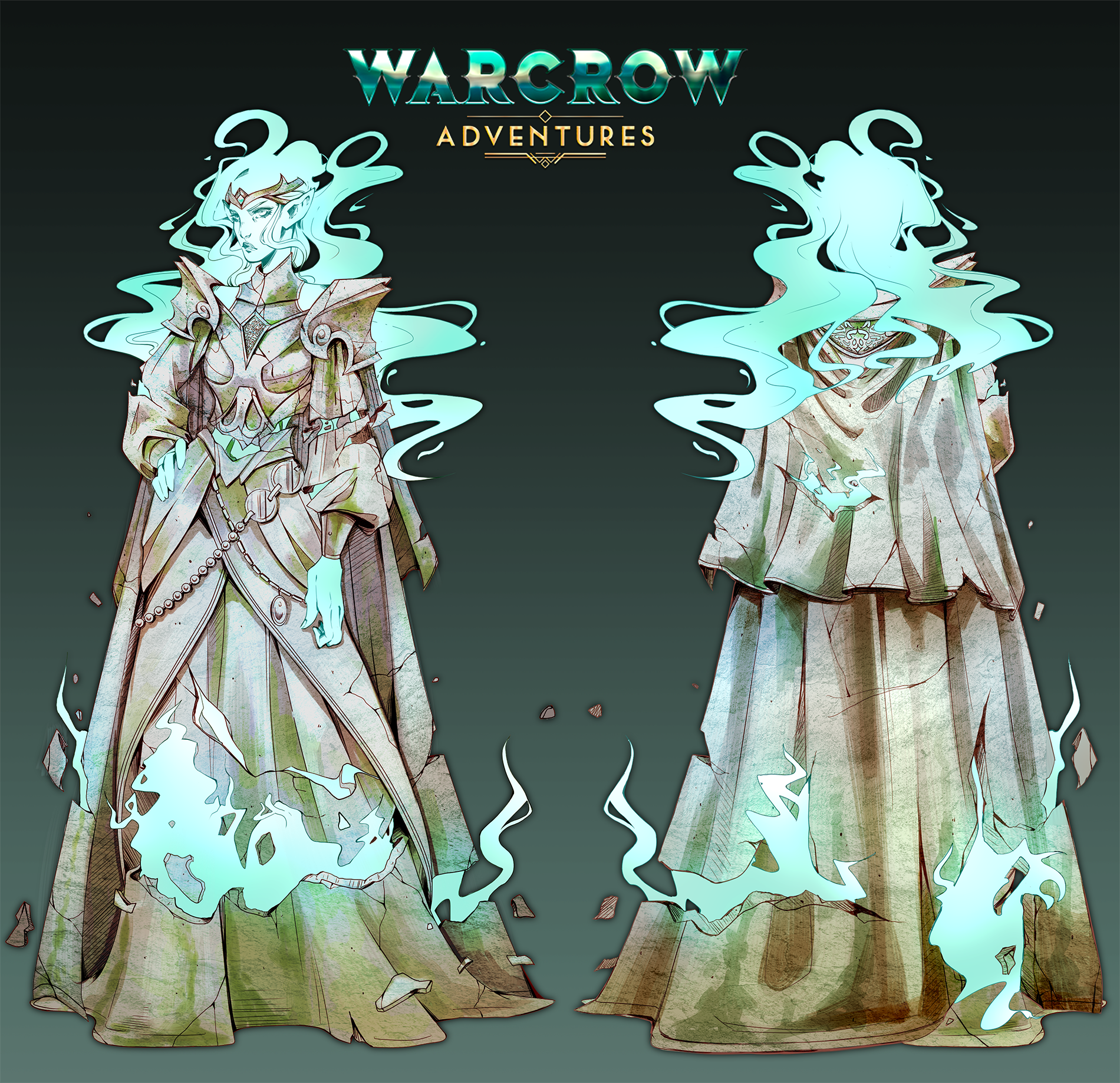
For the Echo, my sketches had to keep two important details: they had to reflect the ghost with a distant past and its soul had to be represented through a stone statue that this creature would control, linking the Echo to a physical object.
After studying the main references provided for the Echo, I crafted a sort of reference "Frankenstein", considering elvish attires and armor sets, weapons styles, and statues for every different type of rocky materials and textures (that's A LOT of statues).
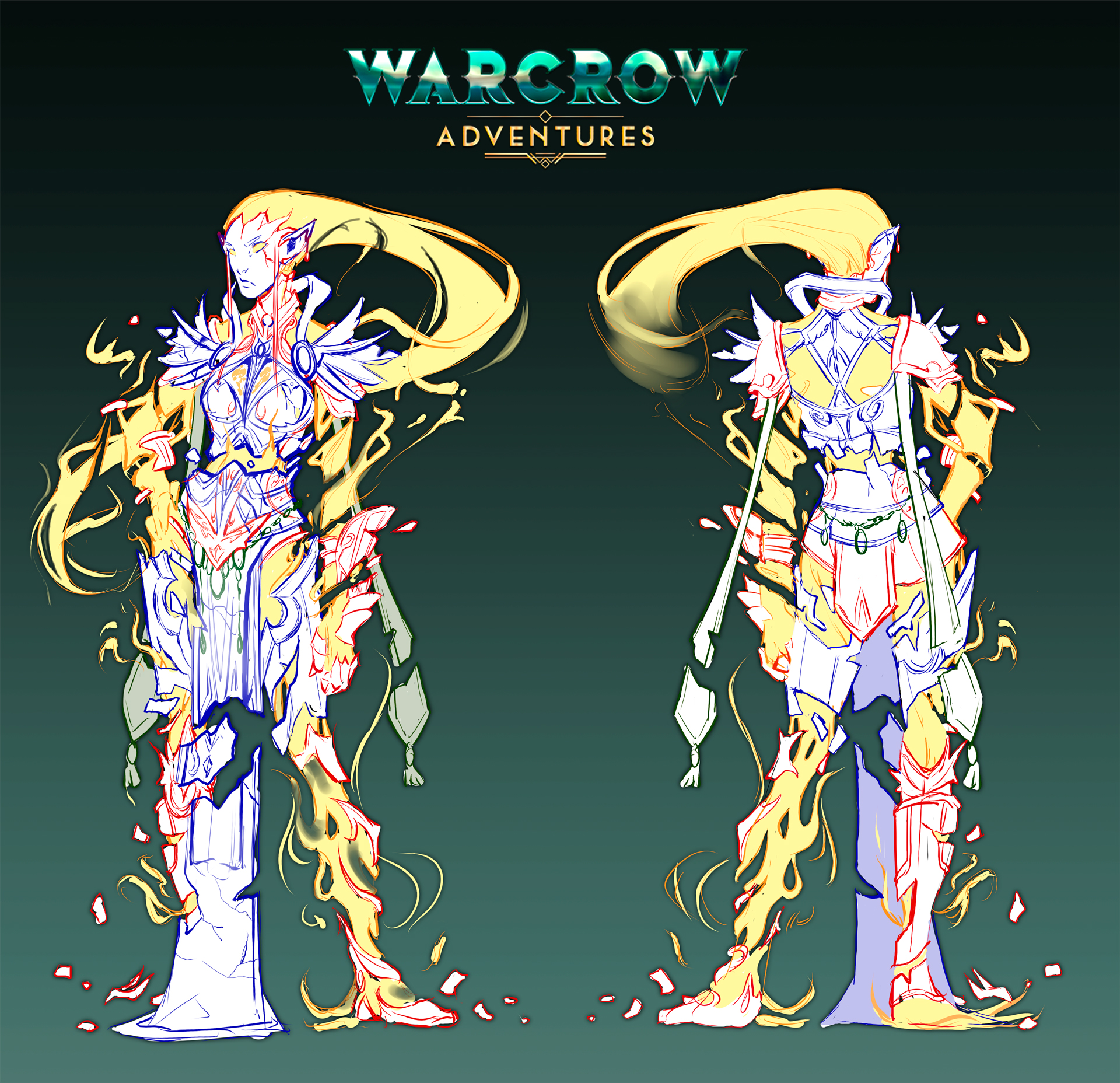
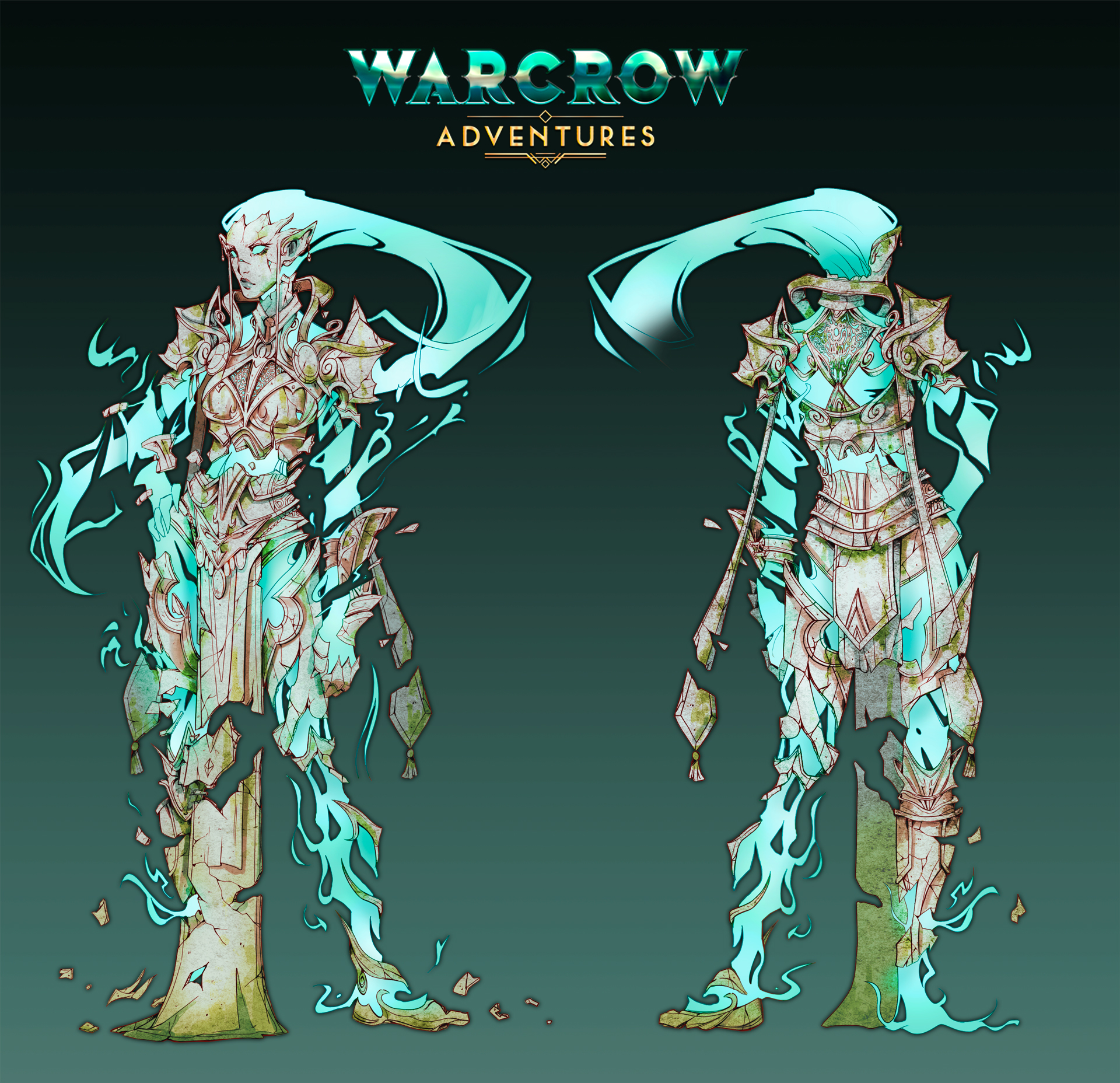
The soul is the centerpiece of its design, so I had to reflect it through disembodied auras filled with light within the statue. I'd highlight the Echo's warrior design and Vinyara's elven robe and bright flowing hair.
Vinyara
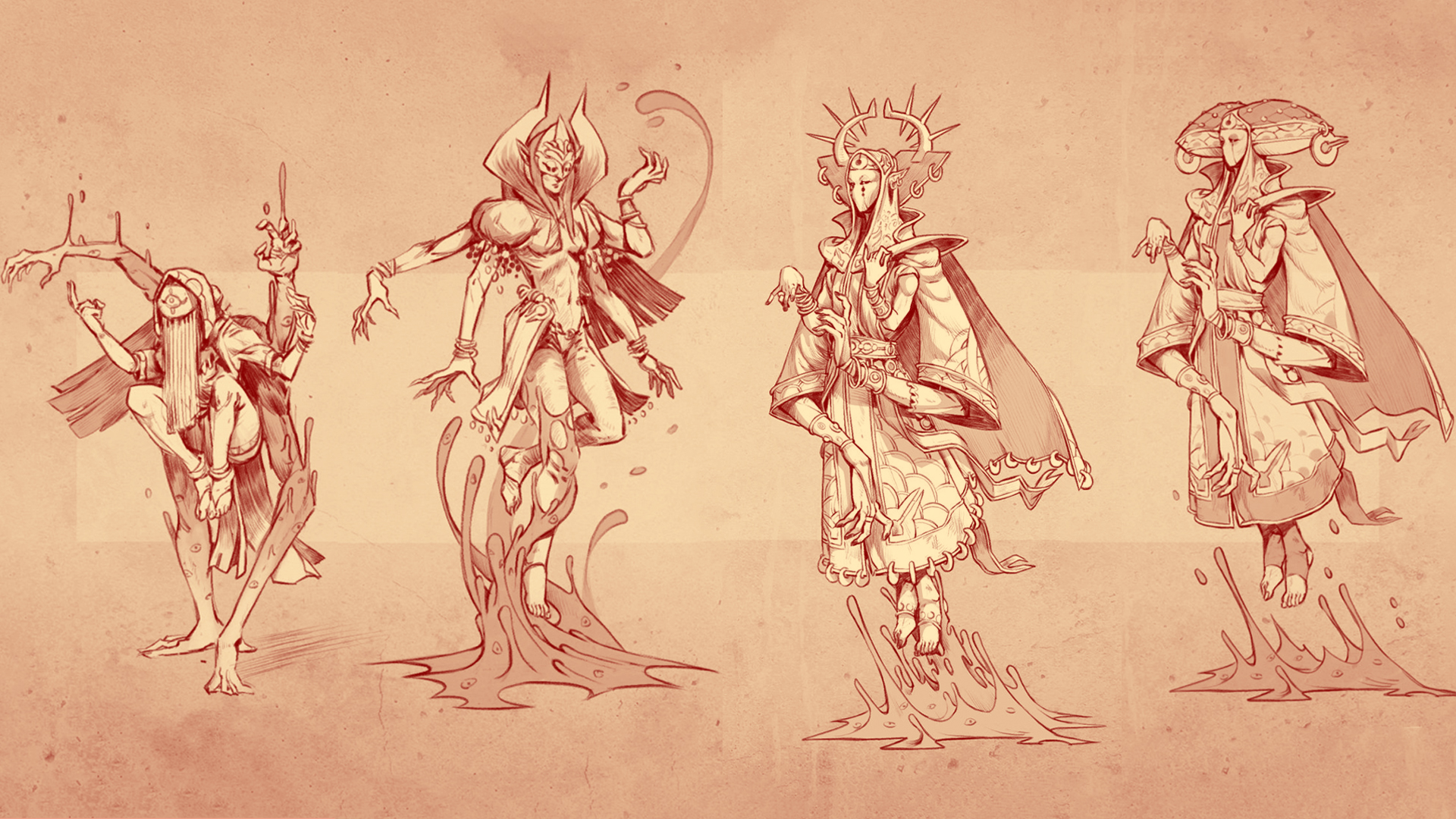
Something similar happened with Vinyara, I had to consider her backstory in order to create her. Unlike the Echo, who was a statue, I imagined Vinyara (in addition to being a leader) with a more noble elven attire, but still emphasizing her warrior ethos and showcasing her importance and station.
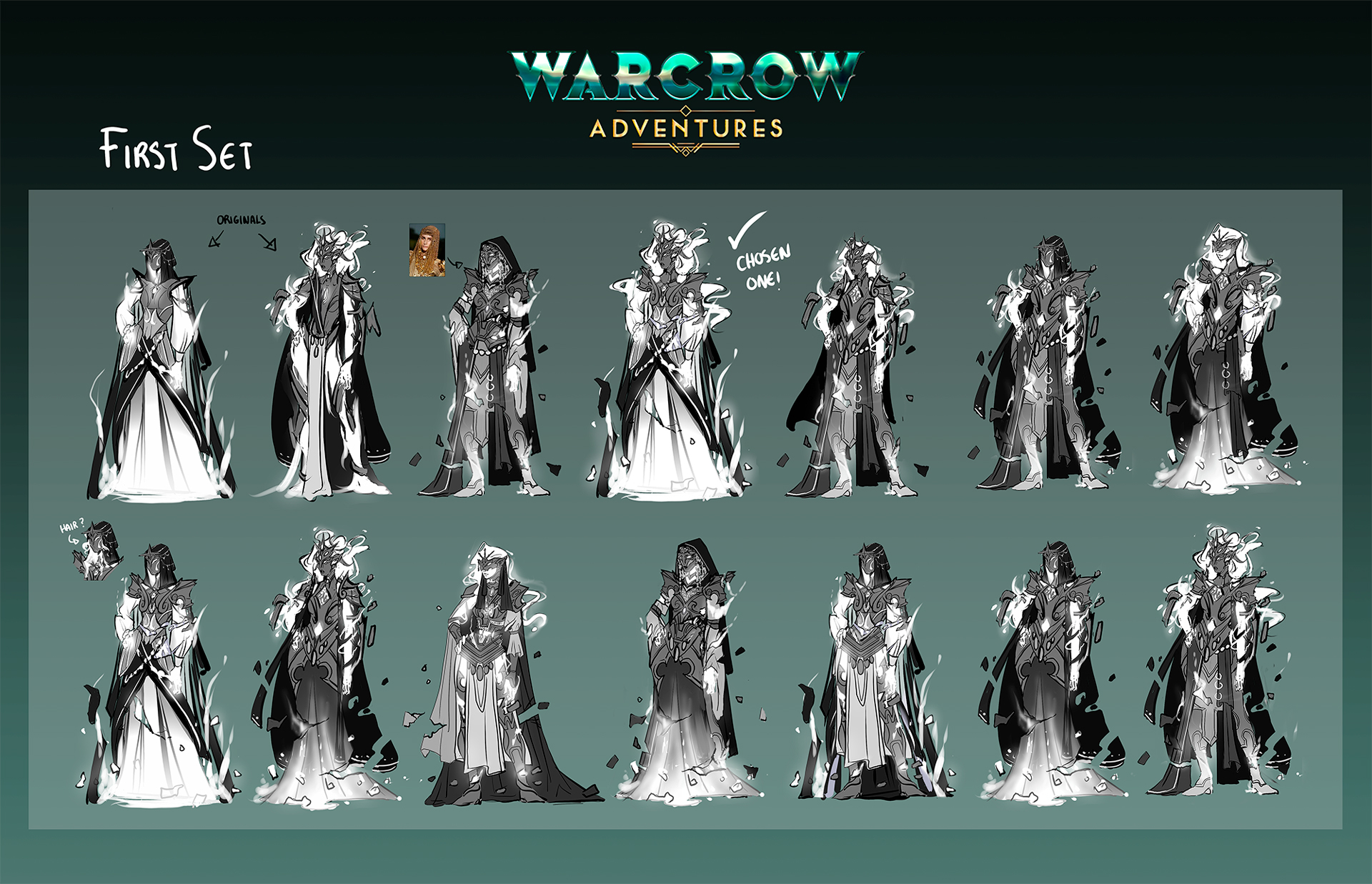
It was much easier with Vinyara since the design for the Echo had been approved already, so all I had to do was to give them a sense of unity and make them appear as part of the same team. The Echo's sketches acted as a reference to create Vinyara. Having a clearer idea of where her design should go, the idea development process was very smooth. I immersed myself in fantasy clothing styles with ethereal undertones to create her.
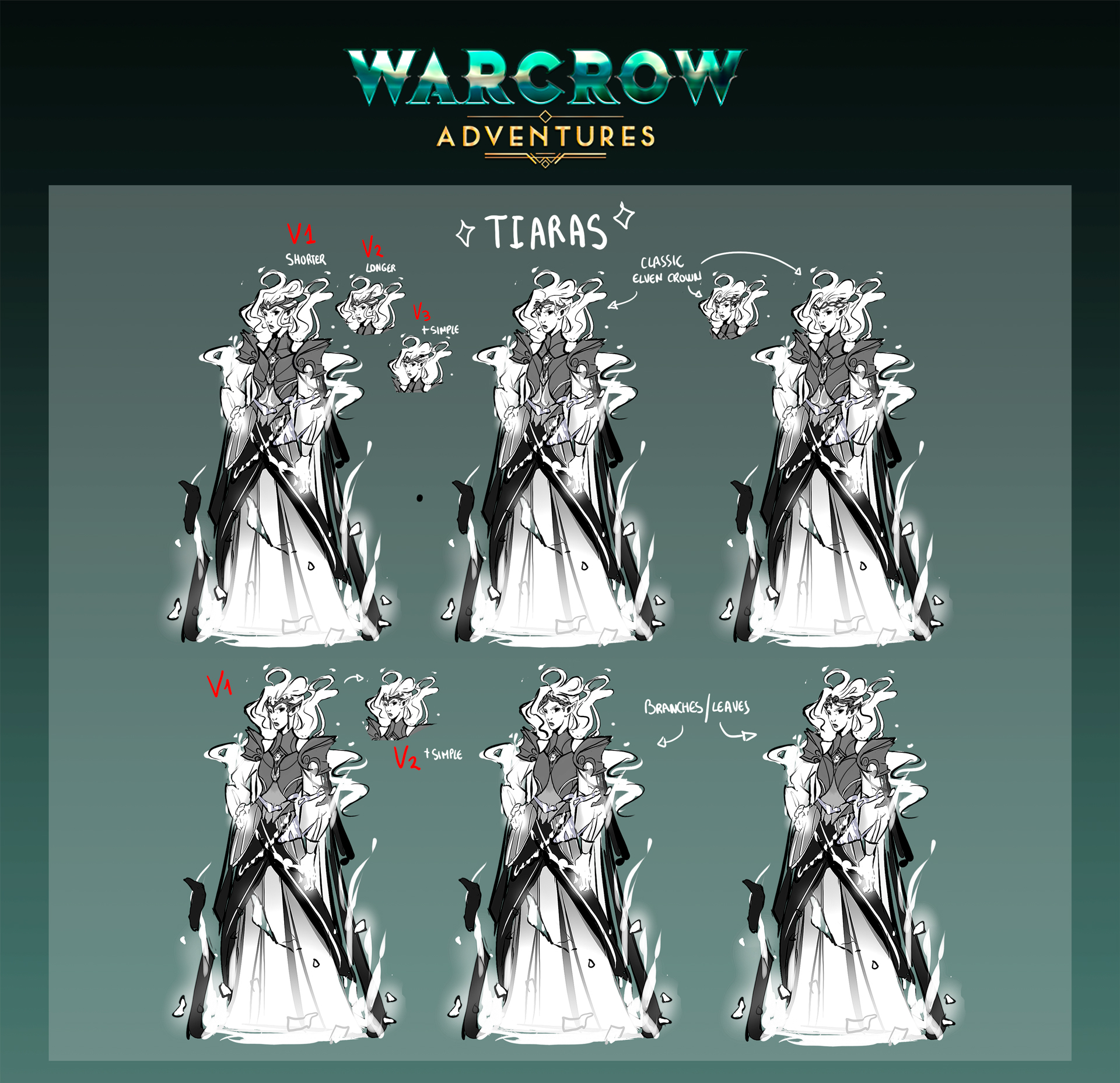
I found the challenge of how to incorporate a ghost into a statue super interesting, so I really enjoyed the process of deciding how to develop them. I love creating fantasy armor and designing different versions for the Echo and for Vinyara was quite fun. I love adding lots of ornamentation, but I had to tone it down a bit or I'd end up hearing from the 3D artists… Ha, ha, ha!
How to keep aesthetic coherence from one character to another?
The process was trial and error. I made different sketches for both characters with more or less armor, with masks, light colors, statue textures, wear, and tear, etc. From there, it was a matter of refining them little by little until I got an idea that the art department liked. To keep coherence, one has to bear in mind the ornamentation style of the armor or clothing used for one character and reflect it in the other to display a unified style.
Of course, I looked into the style of the other characters that had been created in order to follow the game's style and visual line, thus creating an artistic "unity."
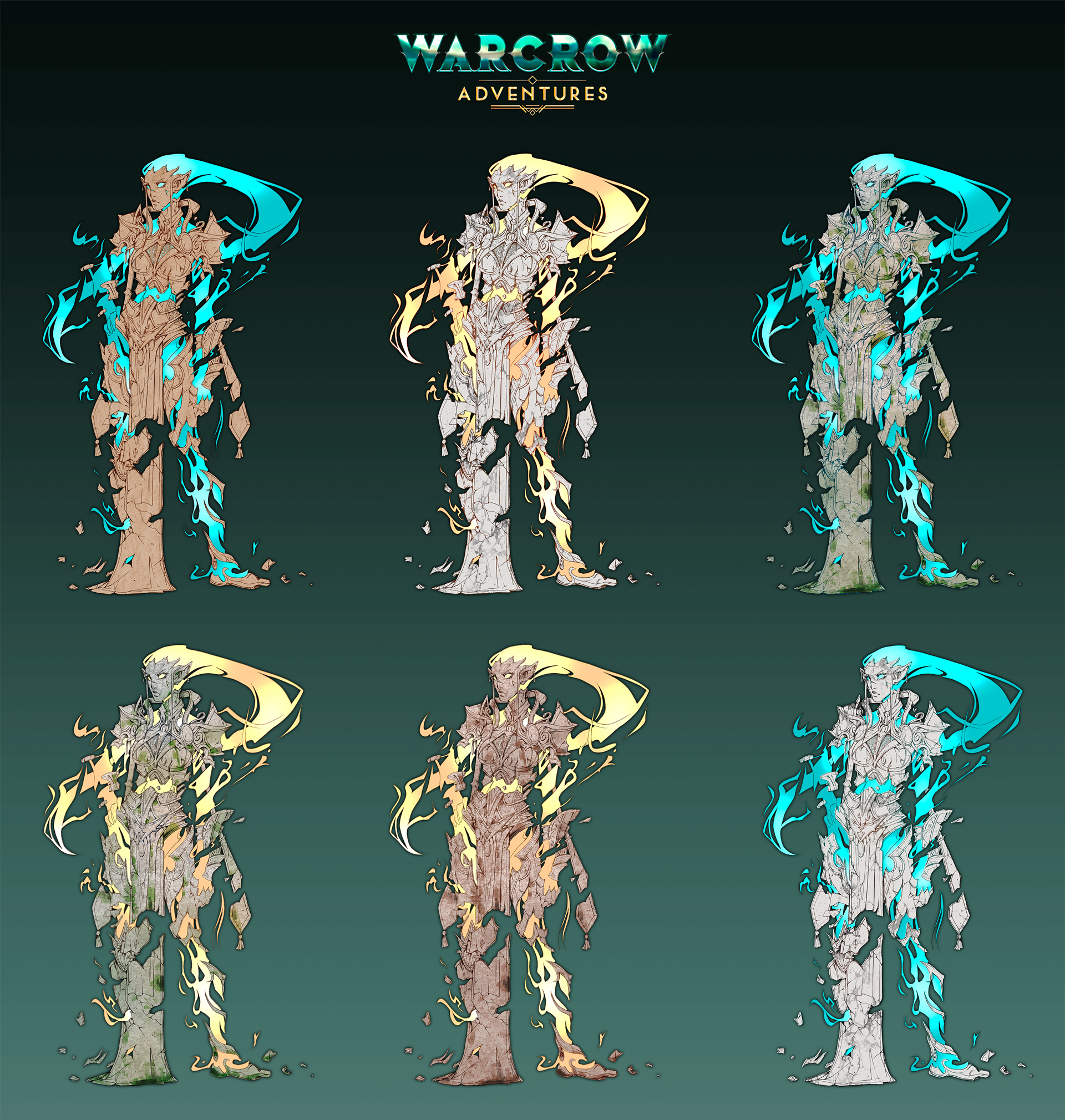
It's also crucial to keep the same (or a similar) color palette, especially if they're going to be miniatures for a roleplaying board; color plays a significant role in setting apart factions at first glance. These characters have two predominant colors that stand out: turquoise and stone-gray tones.
A piece of advice: references
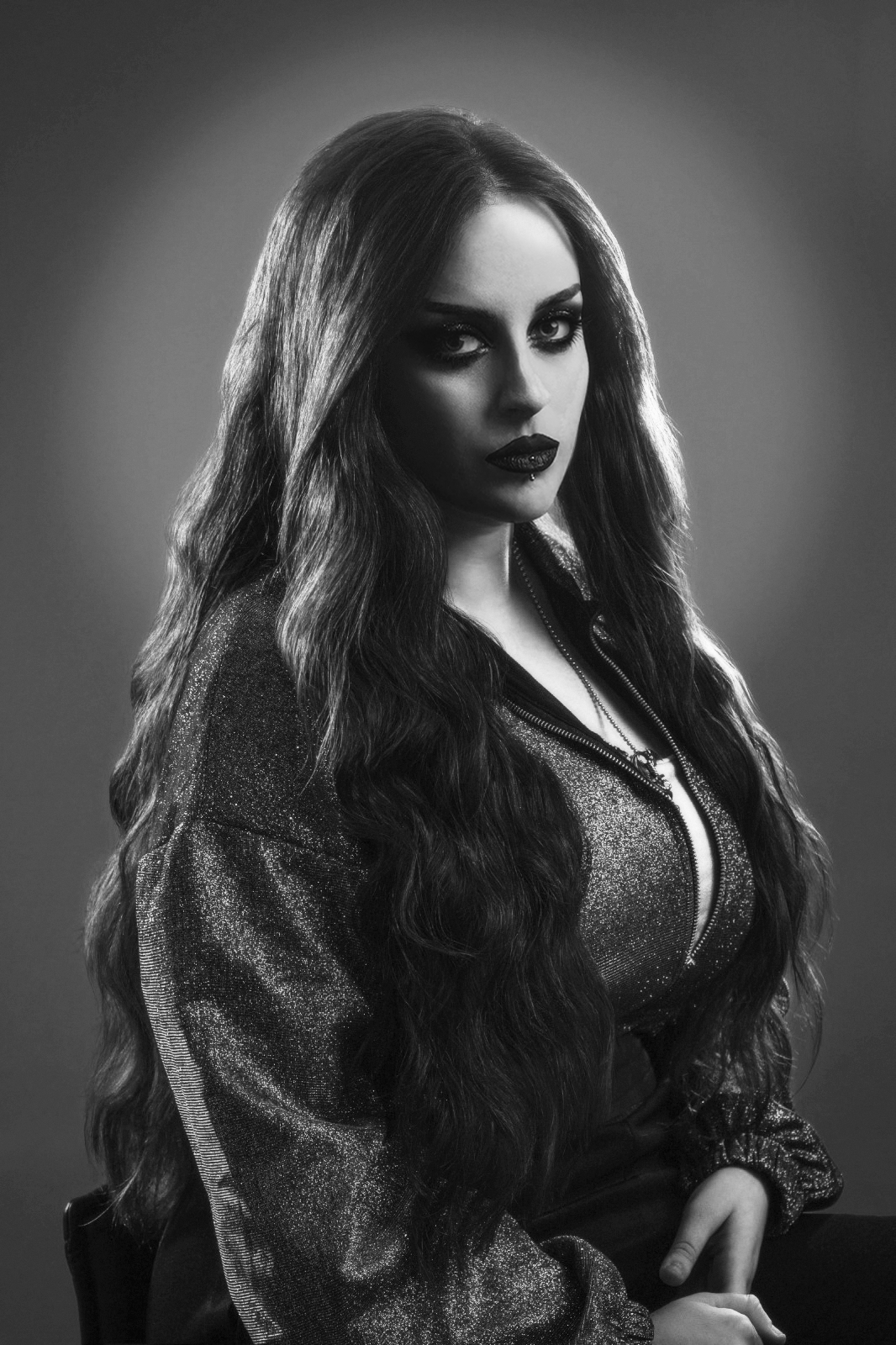
Follow Claudia's profile
To learn about her other projects head to Artstation or Instagram: