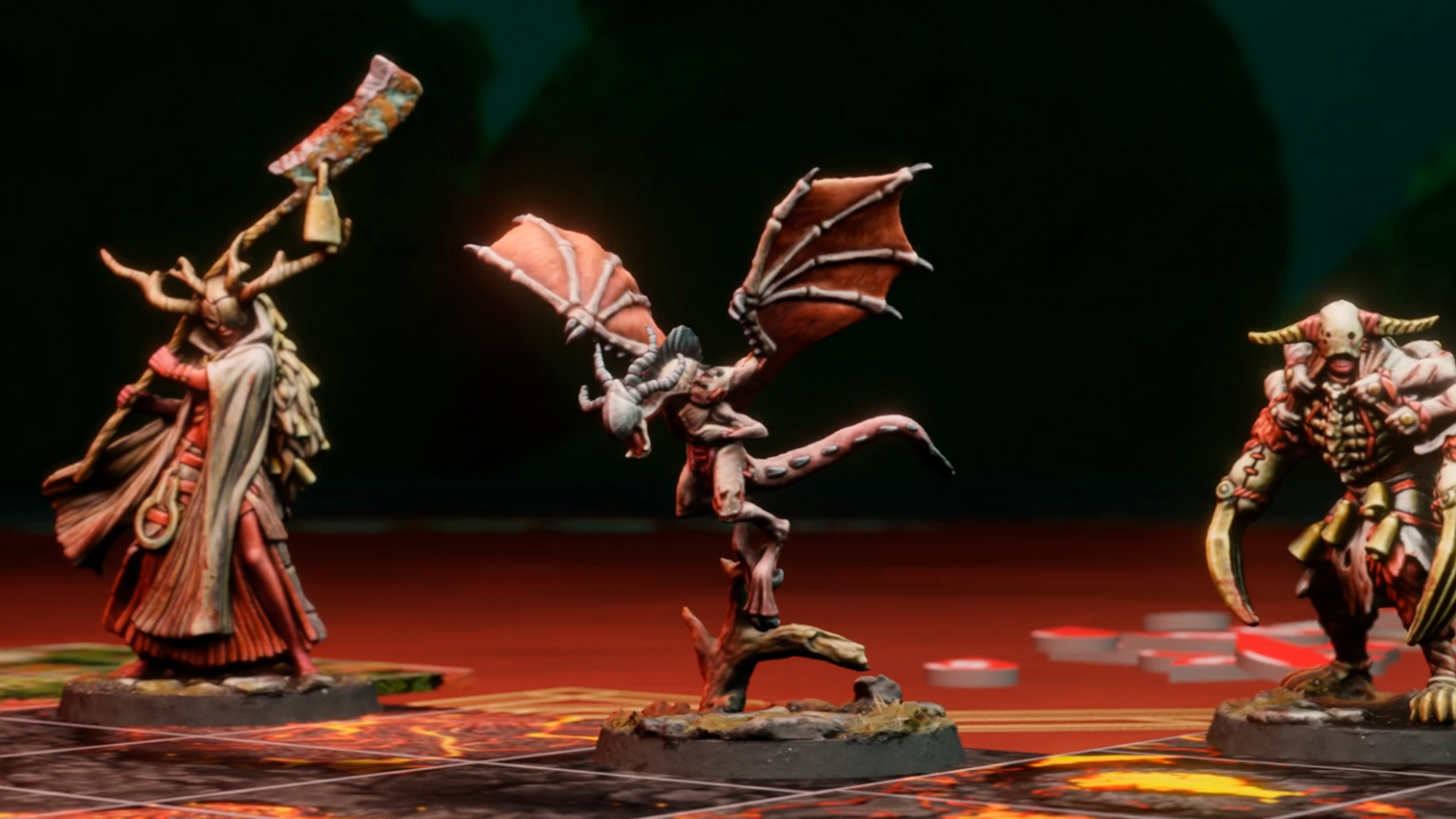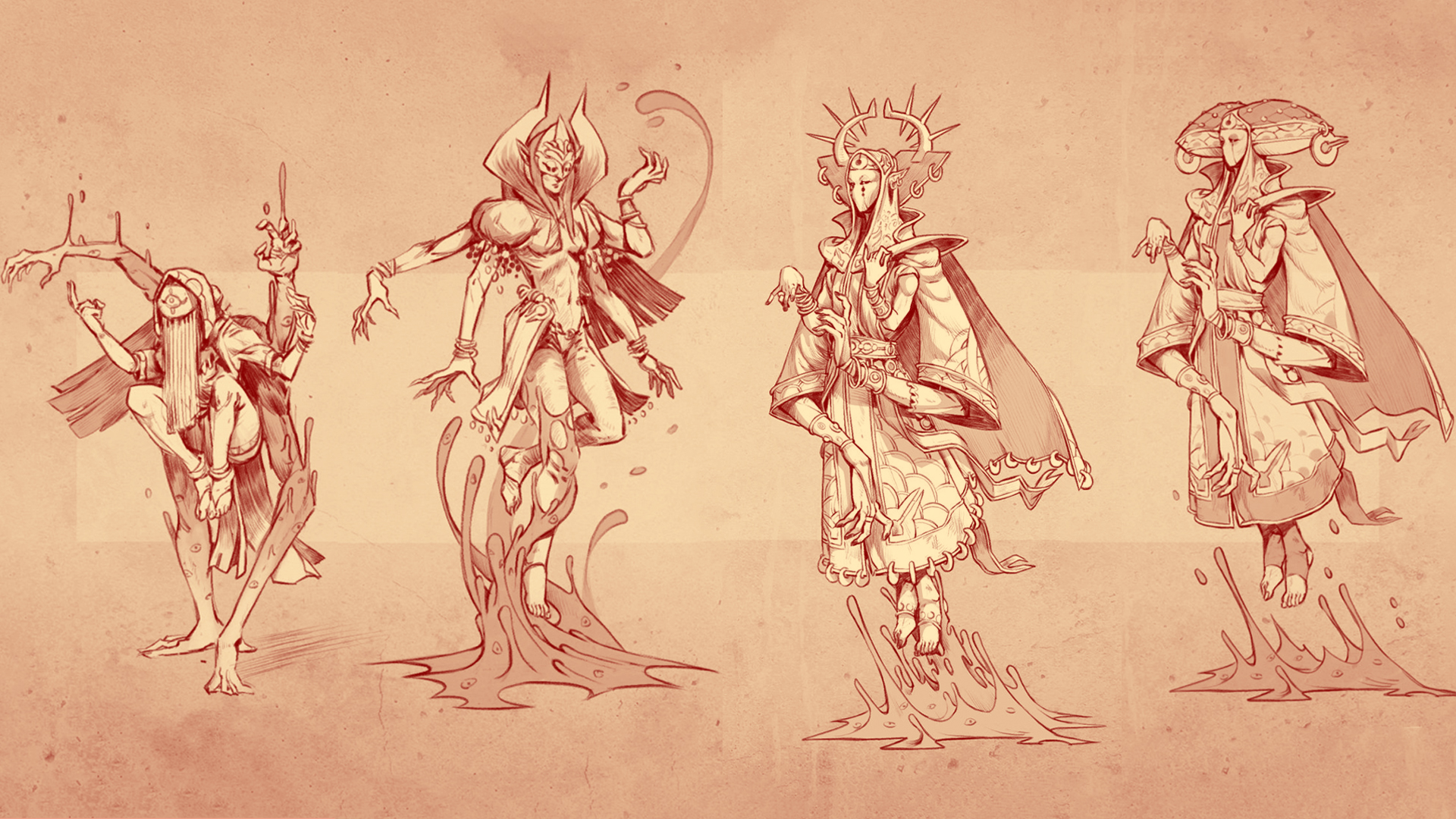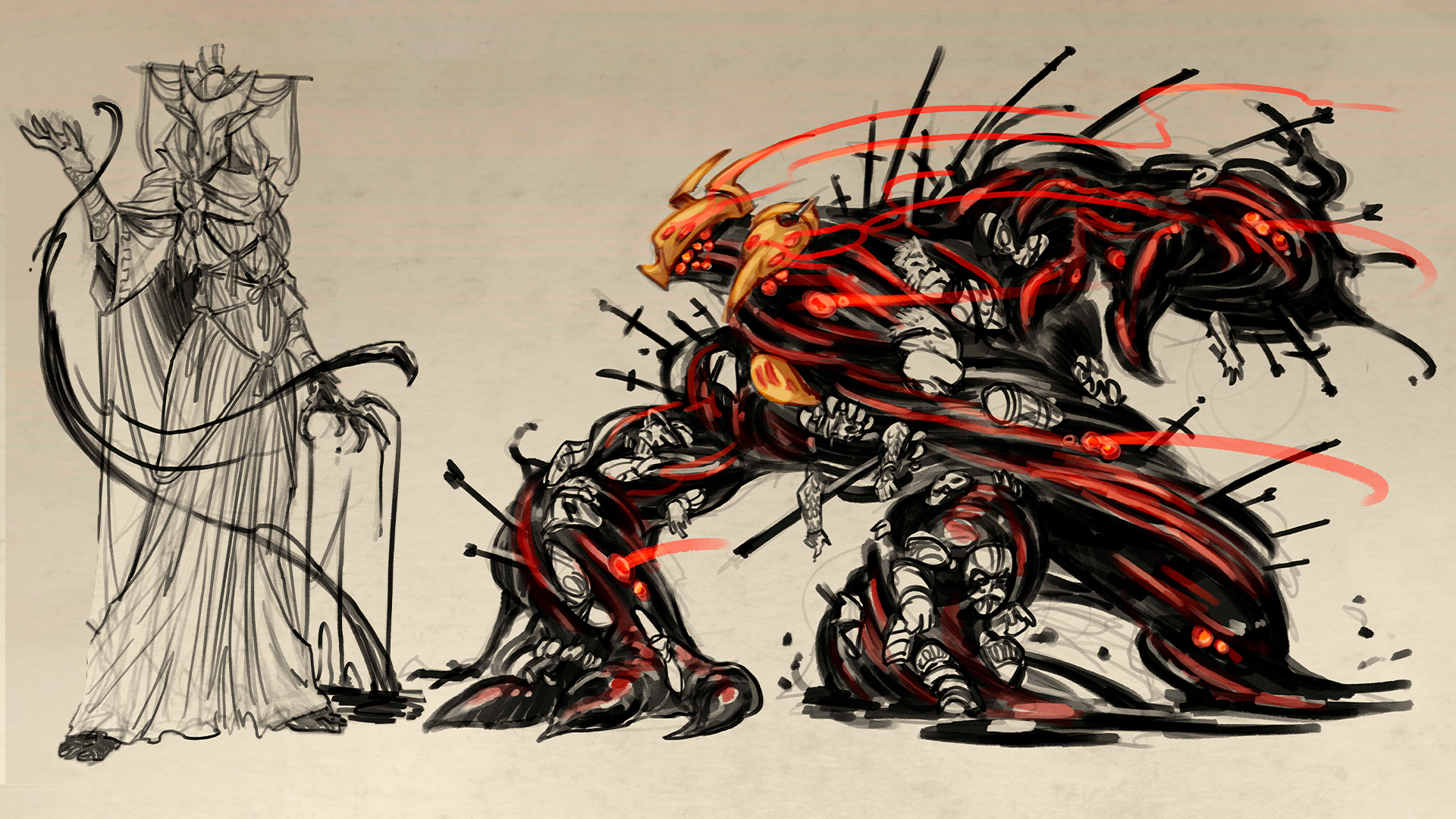
For us developers, variety is one of the most important factors when creating a group of characters (the Dysfunctional Family, as I happened to name them). During the creative process, it’s easy and tentative to be carried away by the all-time archetypes; they are not bad or worse, quite the opposite. Because they are well-known and already proven effective formulas, settled on a solid base the public understands and receives straightforwardly. There are characters much easier to connect with, since all of us have probably played a version of them, being the fastest, the bravest, the most intelligent, or the most powerful of our party.
And then, there is Ismail.
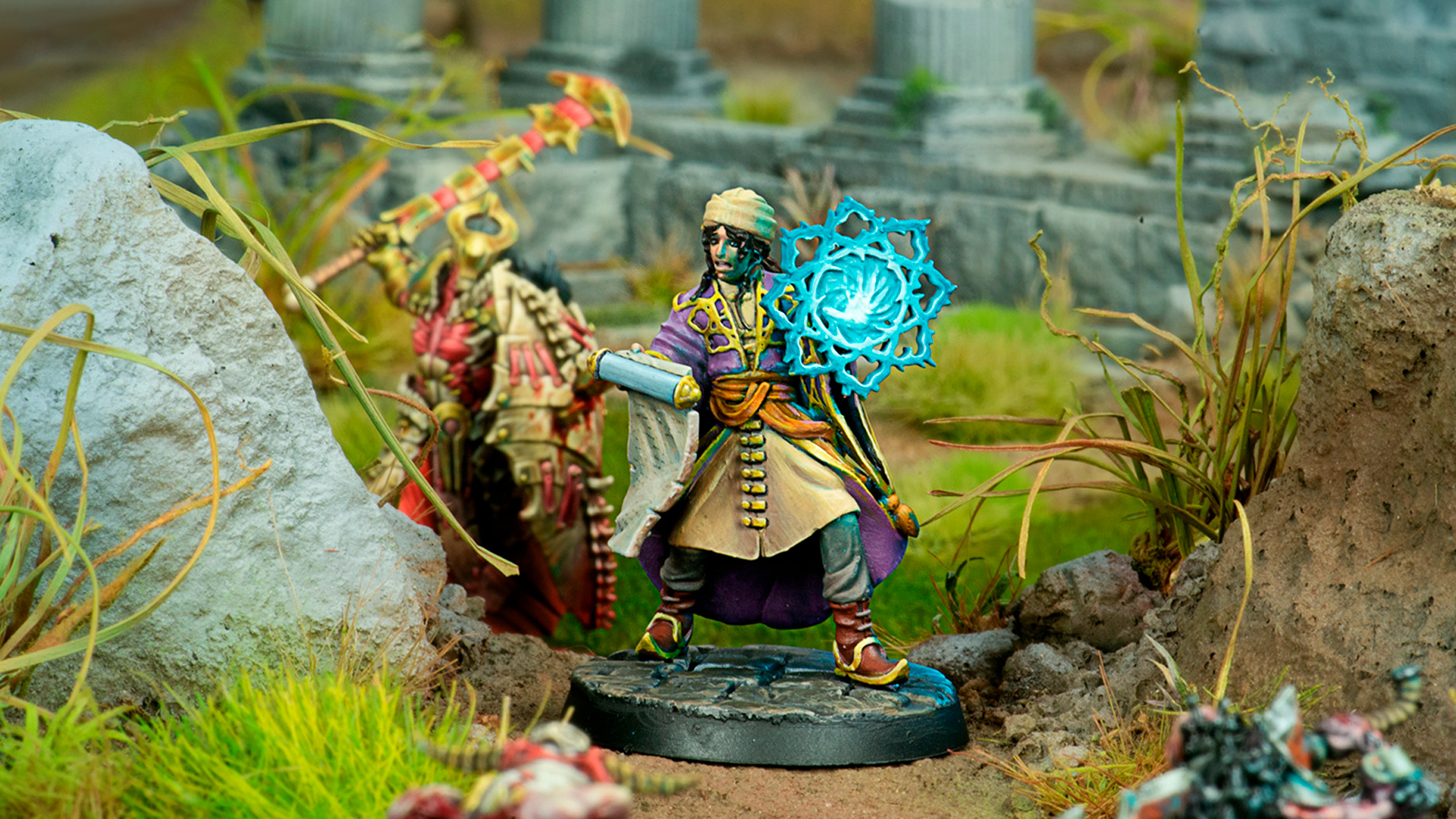
I would not be able to say when Ismail appeared in my mind because I have the feeling he always lived there. When I joined the team at Corvus Belli and started working with what would become the characters for *Warcrow Adventures*, I knew I wanted him to be there. I can state I even saw his face, his height, his scared eyes and the colour of his hair. The only thing that changed over time was his surname, but that’s another story.
As a Dungeon Master, as a player and as a creator, I have a soft spot for unconventional characters. For those who do not wish to stand out or those who bluntly do not stand out, but whose sole goal is surviving and being accepted by the party they belong to. And despite the idea of them holding the most incredible power within them is tempting, it does do it for me. I like characters that achieve to become their best version of themselves because they accept who they are, know their strengths and weaknesses, and get to love themselves just the way they are.
That’s what Ismail is all about. About understanding, we all can be incredibly useful if we work with the tools already at our disposal, and do not insist on being somebody else due to the circumstances.
Allow me to share some of Ismail’s secrets.
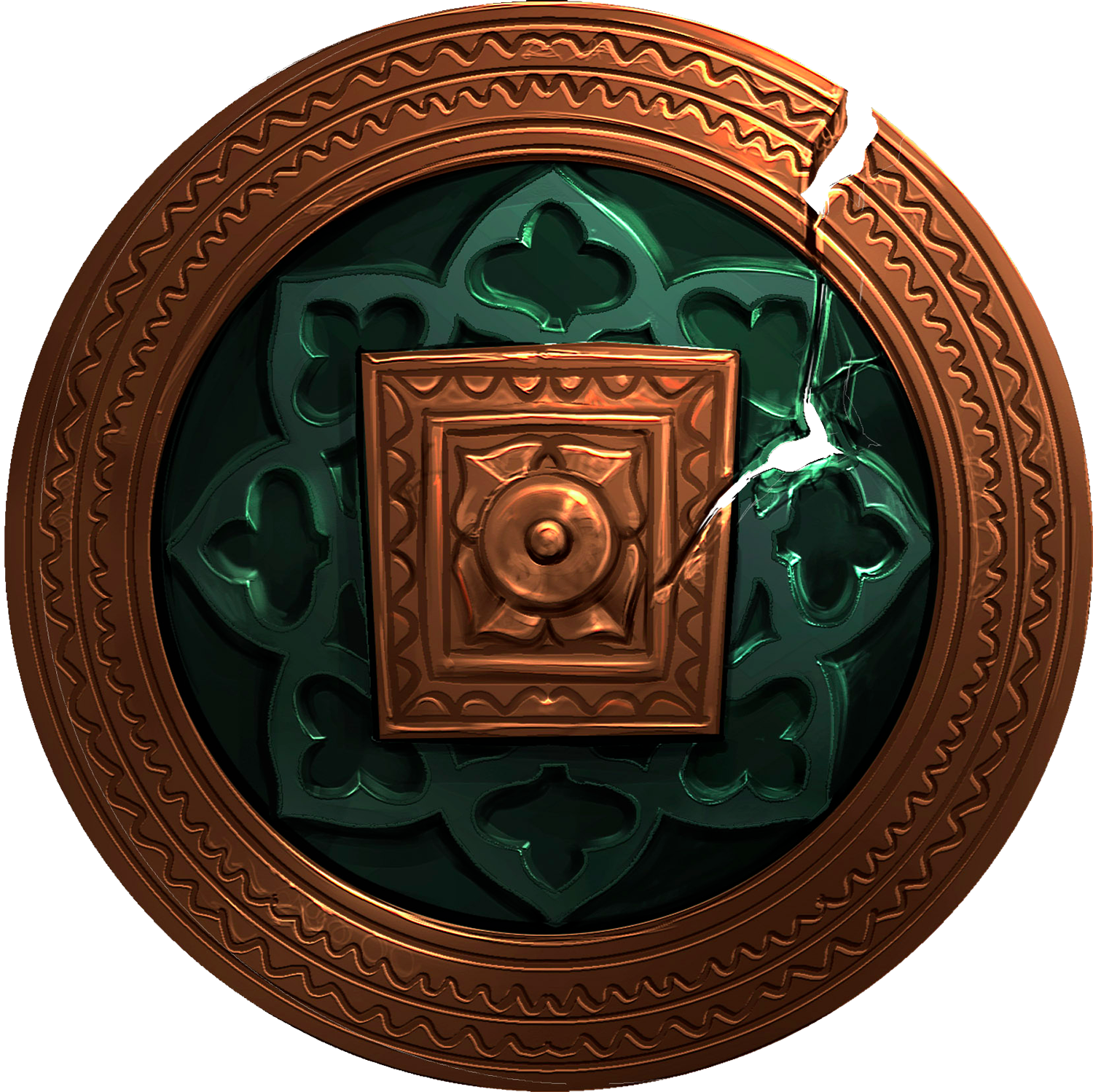
The City of the Dome became more and more solid with every step Ismail took into the development process.
You know the historical element is very well taken into account for the creation of the nations in Lindwurm; well, our little wizard would be no different.
With the knowledge I brought about the Timurid and Safavid empires, the City of the Dome came to be (or Safawiyya, as they say in their local language, rudaki). This city became the home of the Observatory, of the books with the enchanted moving pages, of astronomy and poetry.
Let’s talk about the little wizard. His final surname, Ishraqi, refers to the philosophical school of Illumination, created by the Iranic philosopher Sohravardi in the eleventh century. Thus, “ishraqi” would bean “illuminated” or “detached from the light”.
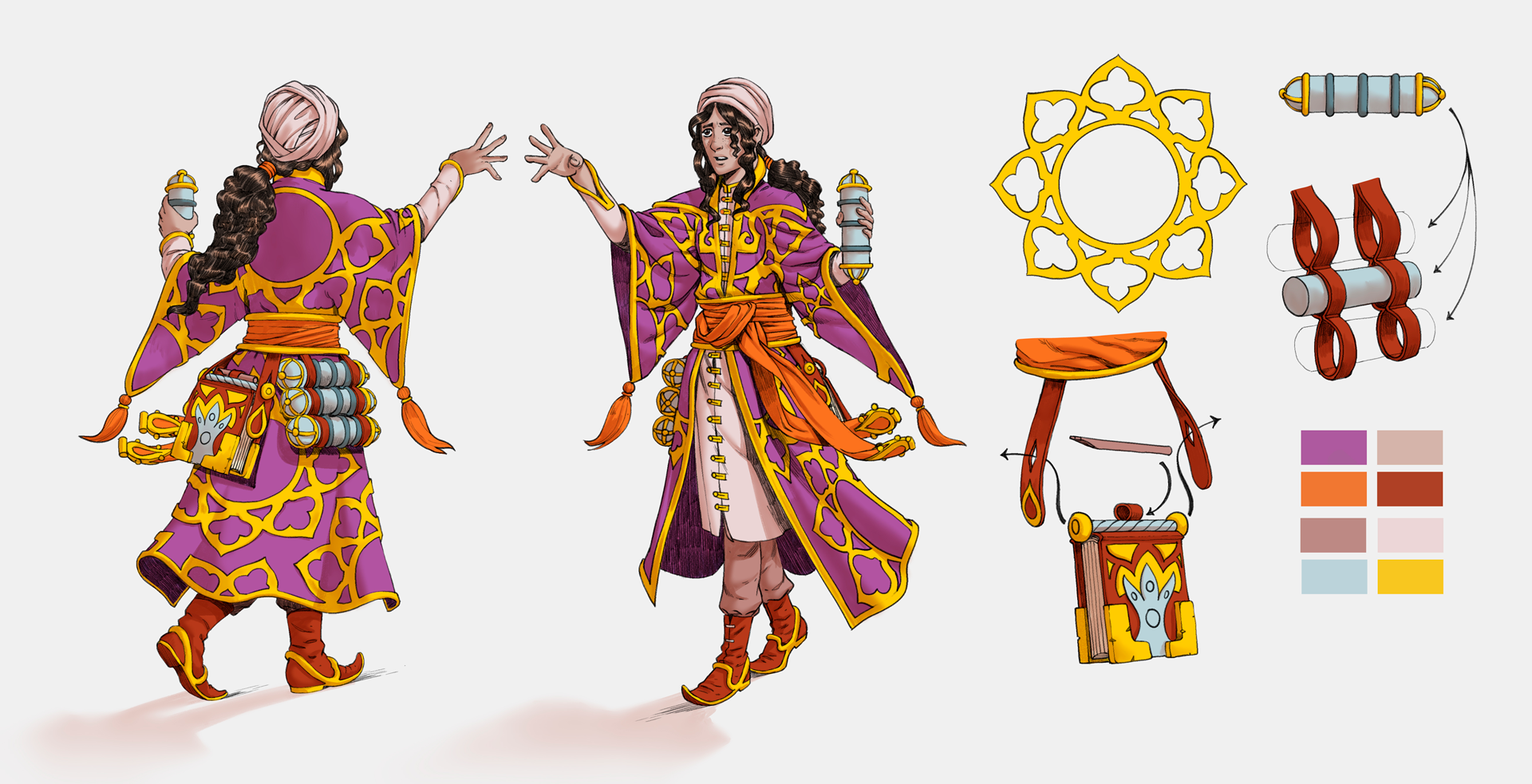
Ismail had to be young because our family was missing a child, and 14 seemed to me an advanced enough age to justify being in an adventurer group, but not so adult to match the other members of the Dysfunctional Family, in their twenties. Plus, it is the age of Shinji Ikari, the protagonist of Neon Genesis Evangelion, so it was just fitting.
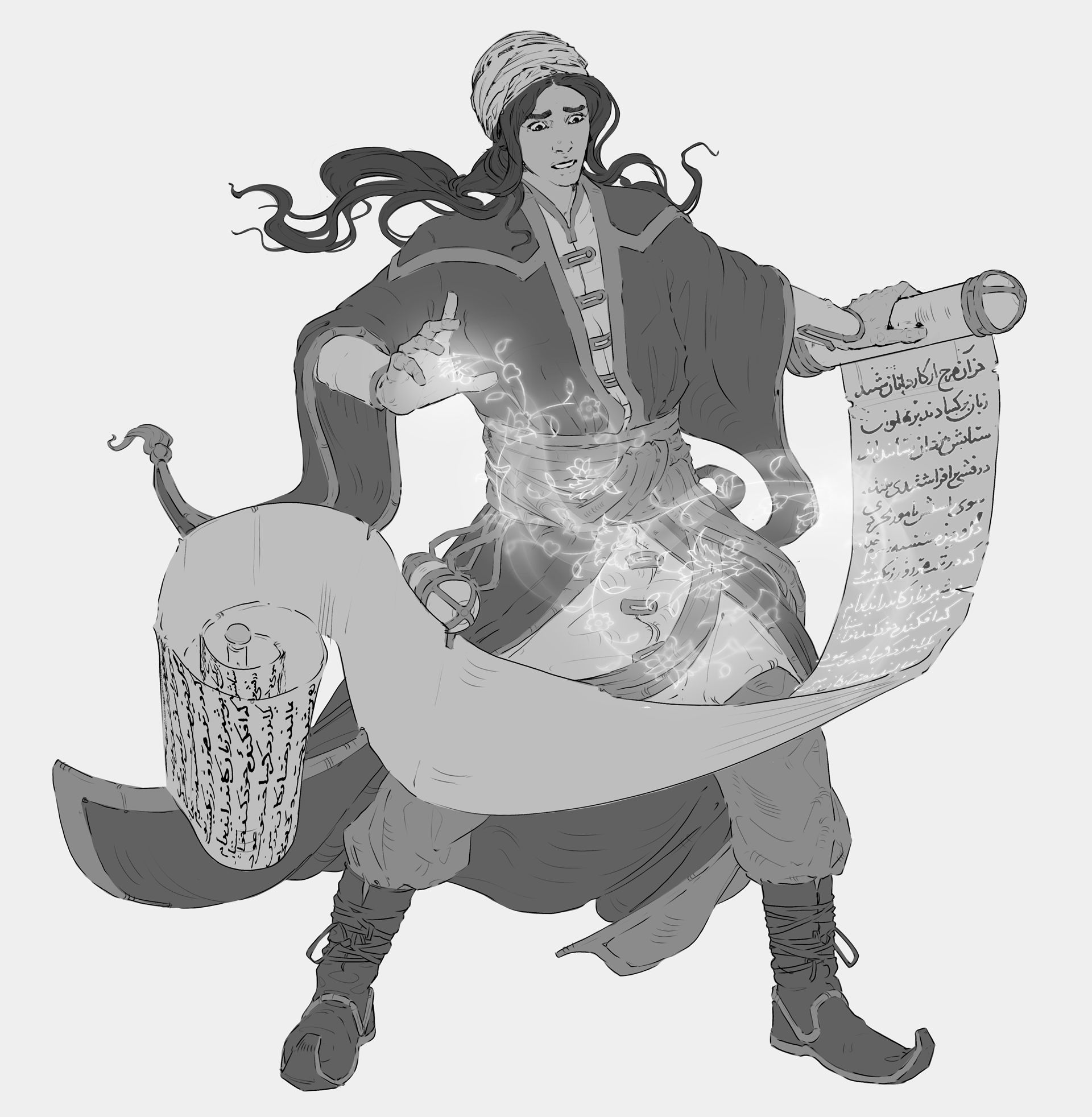
Regarding his power, I wanted to give him a more human dimension, allow me to explain. The majority of characters overcome their insecurities and are, or force themselves to be, brave in all kinds of situations. They suppress fear. Not Ismail, because he is smaller, because his character is weaker, because he has not been exposed to anything as terrible as the Scions until he sets foot in Hawthorn Point. Thus, the most human dimension of Ismail became his main weapon: fear. Working with this mechanic is super interesting because we can leverage it within our narrative arch for it to be functional, but with conditions, still being a playable system.
We cannot forget Ismail is accompanied by somebody very close to becoming a playable character and a member of the Dysfunctional Family, but she ended up discarded. This is how things work in the development process. However, she stayed in narrative shape and morphed into a mechanic. I am speaking of Parisa, Ismail’s silent bodyguard.
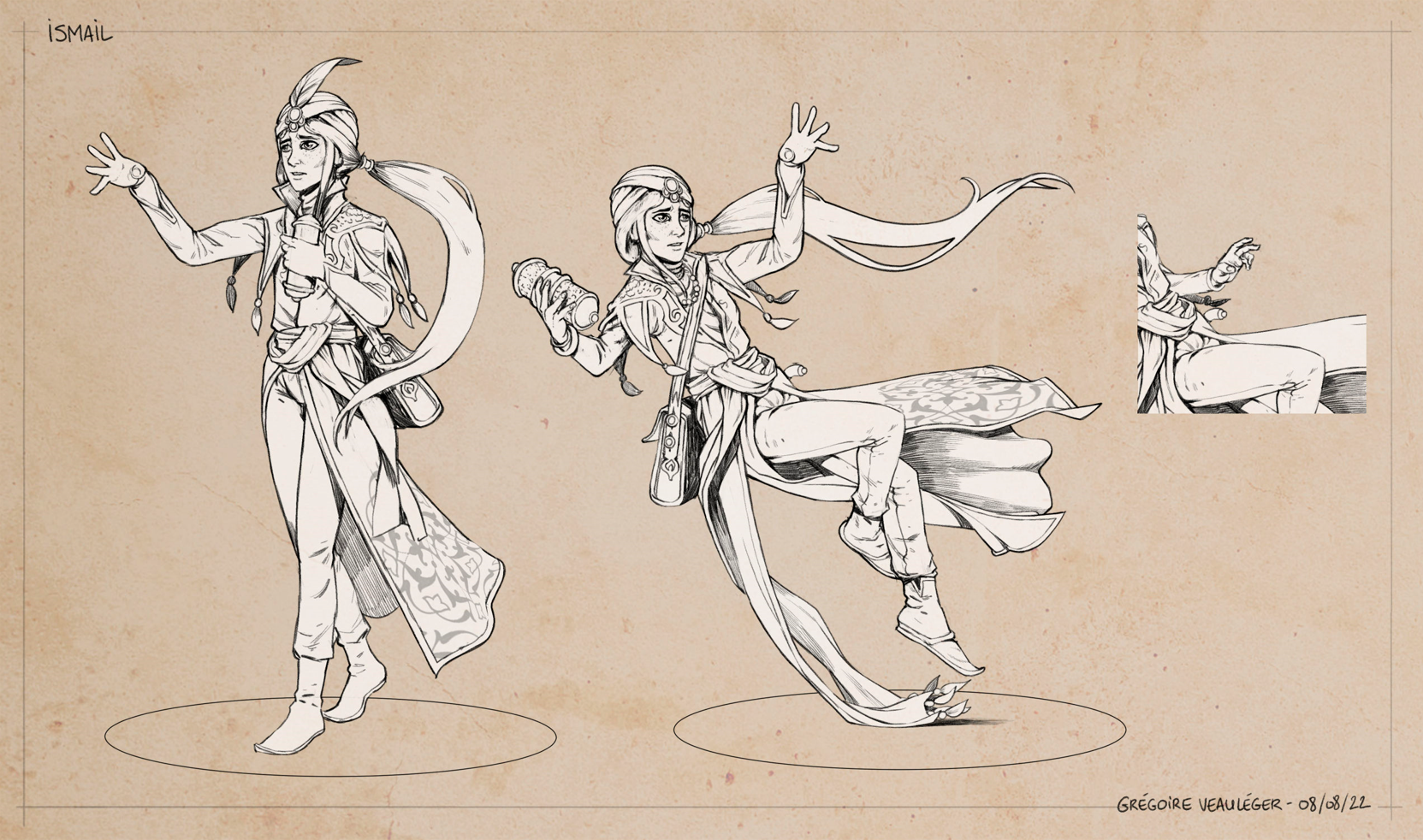
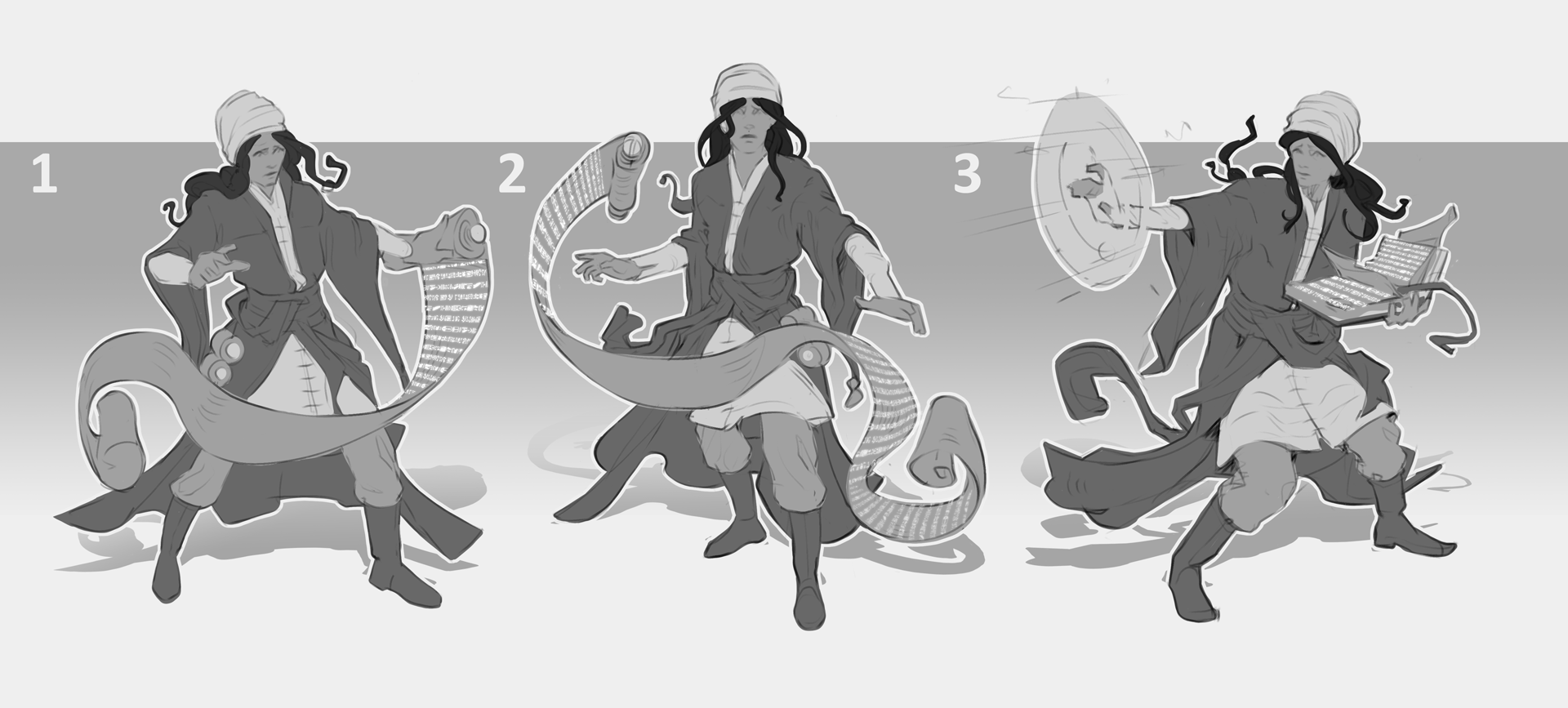
Now let’s dive into the details of the visual design of the boy. The concept design was in the trusty hands of Grégoire Veauléger, and the final illustration was the work of Gega Datunashvili.
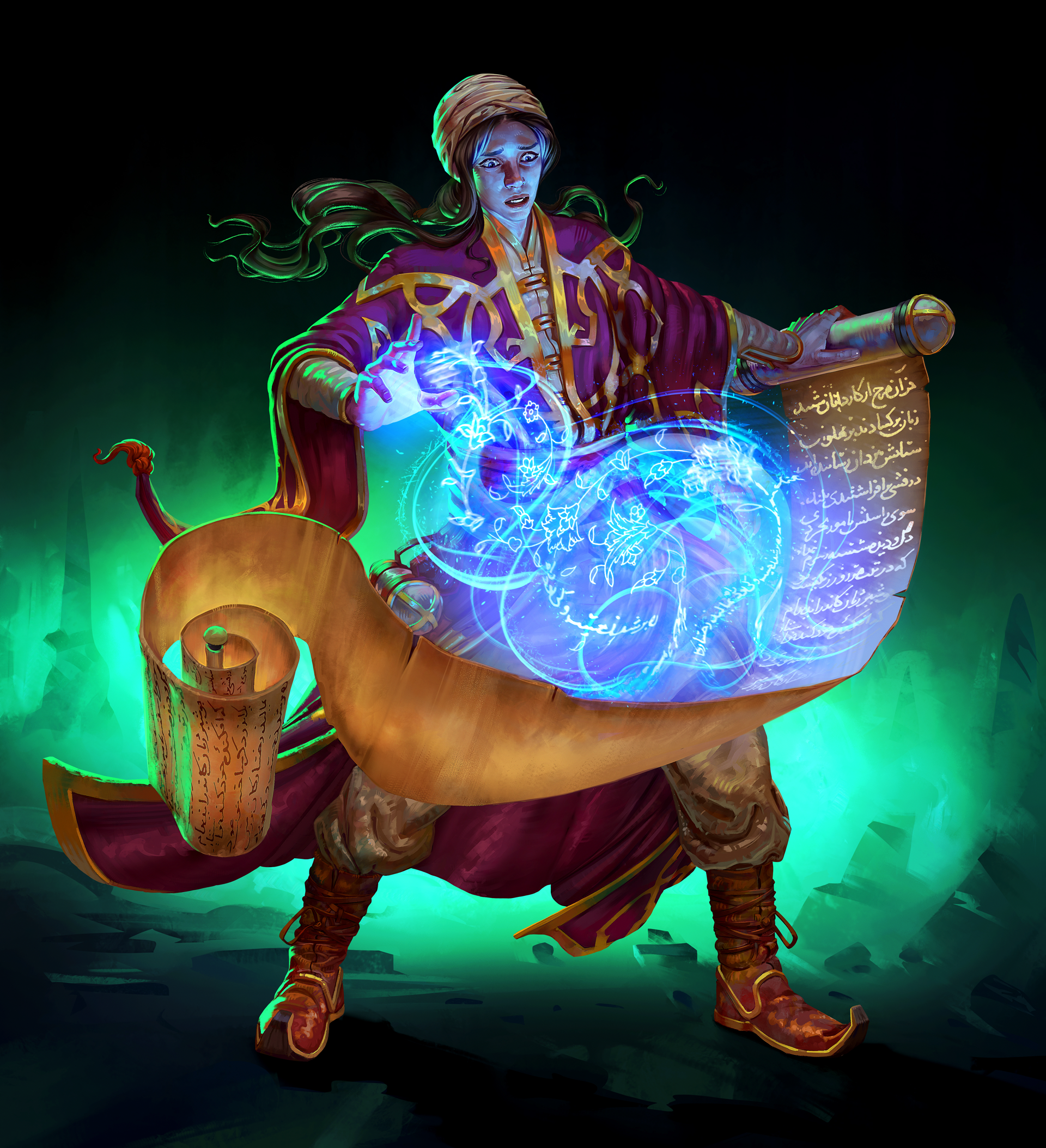
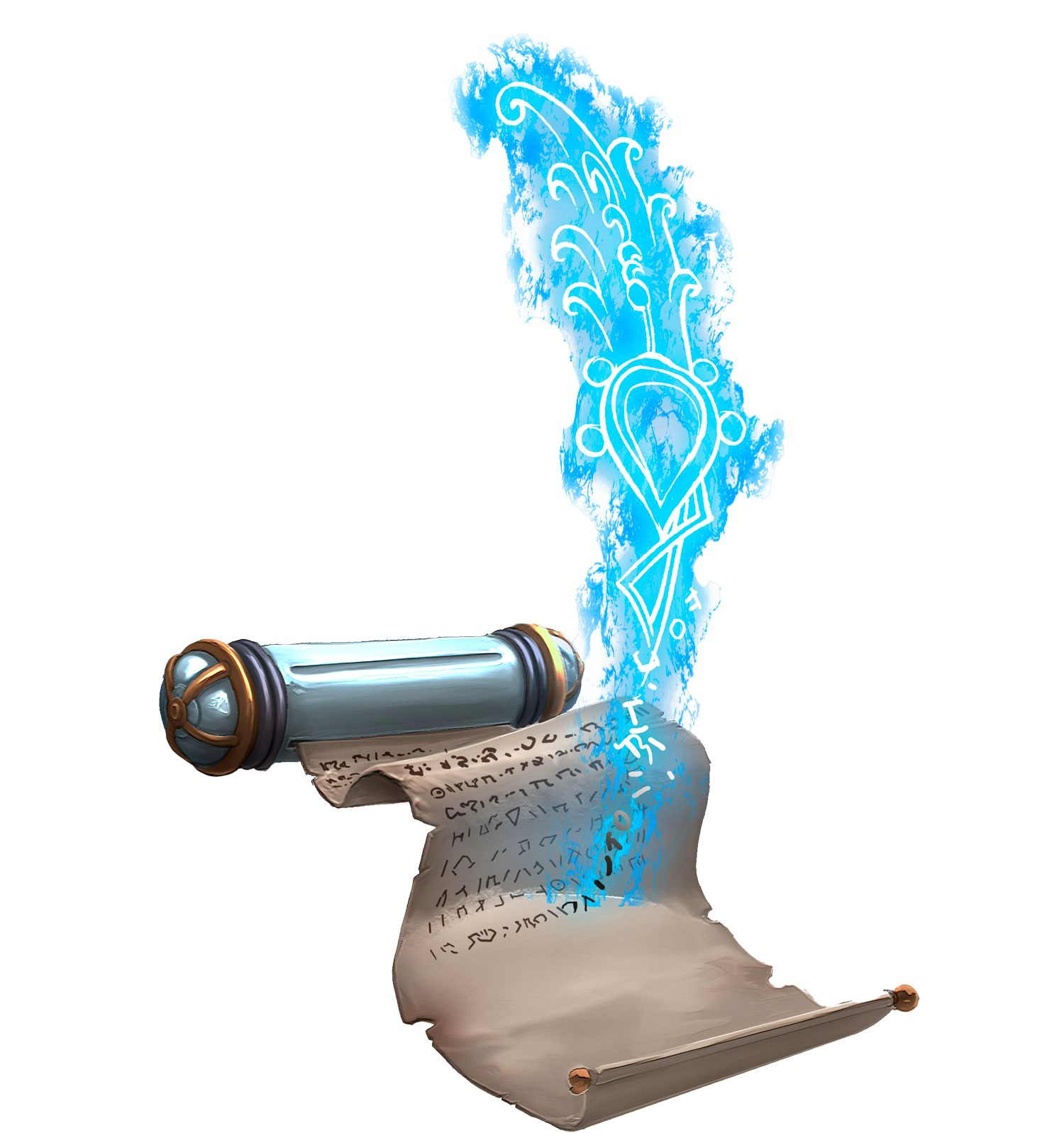
The paper scrolls Ismail uses are inspired by an Islamic talisman called hirz in Arabic and Persian. These are, actually, much smaller. They are normally worn as pendants. In our narrative, the first hirz Ismail utilizes is one containing a paper scroll written by his older brother, Vahab, the person who the boy admires the most.
I hope you enjoyed getting to know better the youngest member of the Family, a character that finally found his place in our game.
Lightning round: Ismail’s family has two cats, a white one named Namak (salt) and a black one named Felfel (pepper). Trabor always calls him “mouse”, because he is so petite. The only thing Ismail knew about Parisa was that, allegedly, she opened a watermelon using her head.